00:00
/
00:00
Dramatize your differences to grow a challenger brand
Challenger brands lack the familiarity that lets buyers choose a market leader without thinking. They have to cut through another way, by being visibly and memorably different at every customer and employee encounter. To dramatize your differences, you need a system rather than a slogan. So what does that system include?
Why challenger brands have to dramatize their differences
Brands help buyers avoid rationalizing each purchase, serving as a shortcut for whatever feels good instead. Market leaders enjoy that shortcut by default. Lacking it, challengers can cut through by dramatizing their differences, expressing their advantage imaginatively across every employee and customer encounter. It is the third of the three steps in how challenger brands position to beat the market leader.
Dramatizing only works once there is something real to dramatize. The advantage comes from the six sources of competitive advantage. Dramatizing is how buyers come to notice it.
The 5S model for dramatizing your differences
The 5S model sets out five areas where an advantage can be expressed.
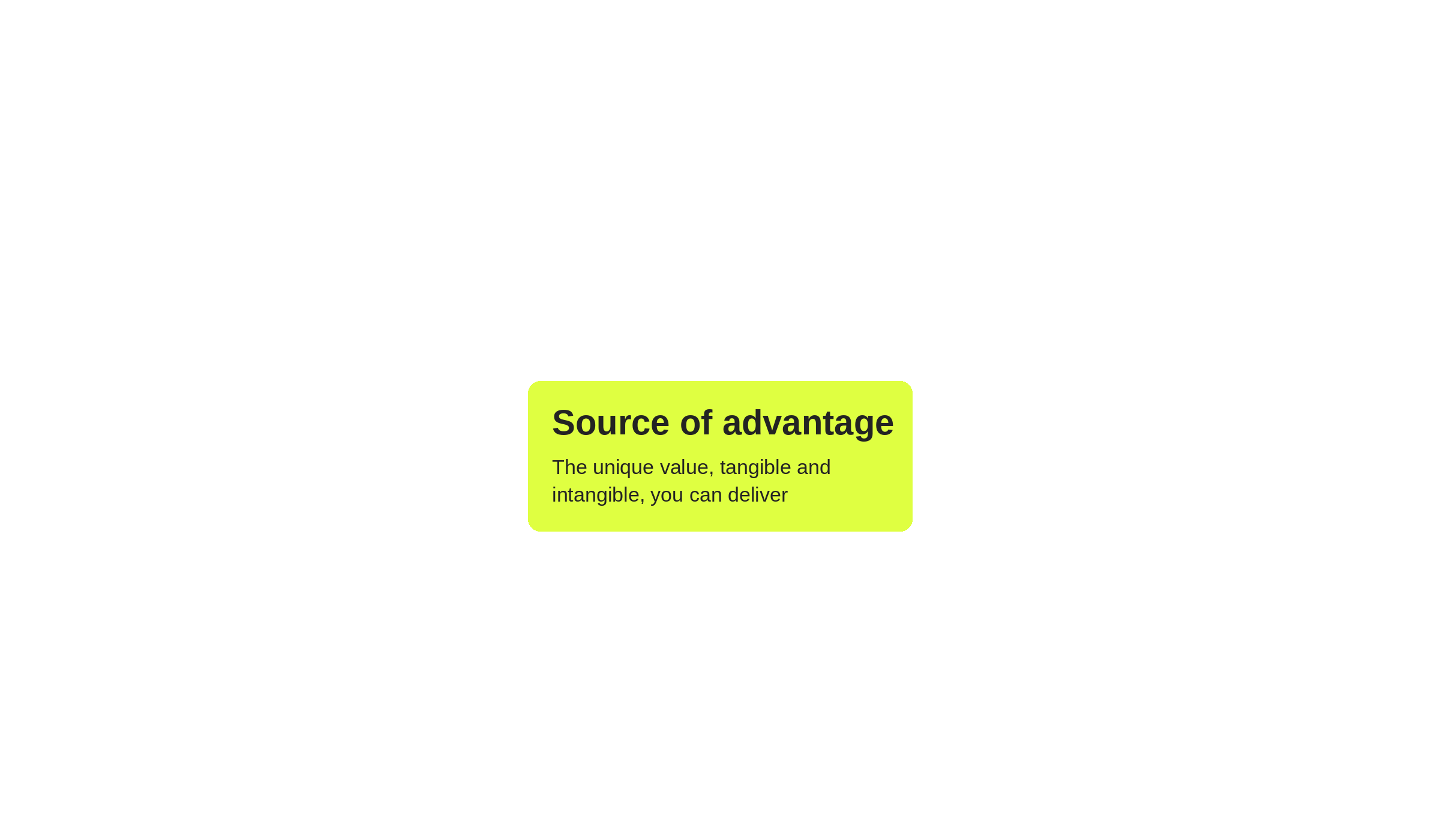
- Source of advantage. The unique value, tangible and intangible, that you can deliver to customers.
- Story and messaging. Framing the space so your brand comes first.
- Style and symbols. Distinctive assets that become emblematic of the category.
- Signature moves. Ownable touchpoints that create barriers to entry.
- Staff, channels and partners. Building mental and physical availability.
The source sits at the center. The other four are the ways it reaches buyers and employees.
Why distinctive advertising performs better
The more different or distinct your advertising, the better it performs. Four findings make the case.
- Brand recognition. Advertising featuring known distinctive brand assets achieved an average 34% increase in brand recognition.
- Short-term sales. Ads that rank highly for making the brand seem really different achieved a 90% increase in likelihood to drive short-term sales.
- Profit ROI. Distinctive brand campaigns achieved a 62% stronger short-term profit ROI than campaigns that were not.
- Price premium. Meaningful and different brands can charge 22% more than competitors that are not.
Source: Kantar Millward Brown, Ebiquity and Jenni Romaniuk, via The Value of Difference, Tom Roach.
The cost of the opposite, advertising that never registers at all, is covered in 89% of ads are ignored.
Ads that make a brand seem really different are 90% more likely to drive short-term sales, according to Kantar Millward Brown.
How powerful words create whitespace
Many brand strategy exercises fail to deliver the impact they promise because they are simply a collection of adjectives on a page. Great copywriting turns a source of advantage into something fresh, memorable and easy to understand. Articulating your advantage is as important as identifying it.
- The Automobile Association in the UK. Its advantage was 24/7 service combined with a larger fleet of mechanics to answer members' needs at a moment's notice. The articulation: "The 4th emergency service."
- Ritz-Carlton. Its advantage was an empowered workforce with decision-making authority devolved to the front line to answer any guest need. The articulation: "Ladies and Gentlemen serving Ladies and Gentlemen."
- HSBC. Its advantage was a large branch network with a strong presence in emerging markets, combined with global solutions for corporate clients. The articulation: "The world's local bank."
How T-Mobile dramatized the Uncarrier
T-Mobile went from number four to the fastest-growing carrier by expressing one advantage through all five parts of the model.
- Source of advantage. Nothing to lose, and willing to attack the status quo and address category frustration.
- Story. The subcategory label Un-carrier.
- Style. Visually shocking pink and urban. Verbally loud, aggressive and on your side.
- Signature moves. Ending annual contracts, Simple Global with unlimited global data and texts, Music Freedom with streaming that does not eat your data, and Carrier Freedom, paying to get you out of your contract.
- Staff. The CEO became a vocal touchpoint and emblematic of the new challenger attitude.
Its CEO, John Legere, summed it up: "We're in the changing-the-phone-company business." Source: T-Mobile keeps growing, and CEO John Legere won't stop bragging about it, Fortune.
How Red Bull dramatized energy drinks in America
Red Bull made it in America by expressing one strategic decision, to limit comparisons with the soft drink category, and Coca-Cola specifically, at all costs.
- Story. The category label energy drinks, and the slogan "Red Bull gives you wings."
- Style. A playful cartoon visual style and a cheeky tone of voice.
- Signature moves. Sponsoring extreme sports, Red Bull minis in college towns, and a smaller can at a higher price that further dramatized the category difference.
- Staff and channels. Stocking Red Bull as far as possible from soft drinks in retail environments.
Its founder, Dietrich Mateschitz, put it plainly: "If we don't create the market, it doesn't exist." Sources: Top selling energy drinks, Caffeineinformer. The soda with buzz, Forbes. Energy drinks charm the young and caffeinated, The New York Times. Energy drinks keep the party going, Chicago Tribune.
Red Bull did not compete with soft drinks. It used every touchpoint, down to where the can sat on the shelf, to make sure nobody compared it with one.
Where dramatizing fits in challenger brand positioning
Dramatizing your differences is the third step, and it depends on the first two. The advantage has to be real, which is why the 5S model puts the source of advantage at its center. The business has to deliver it, which is the job of strategic brand pillars. The 5S model then makes sure buyers and employees notice it at every encounter.
Adapted from How challengers can position for growth, a Creative Business Company whitepaper.