00:00
/
00:00
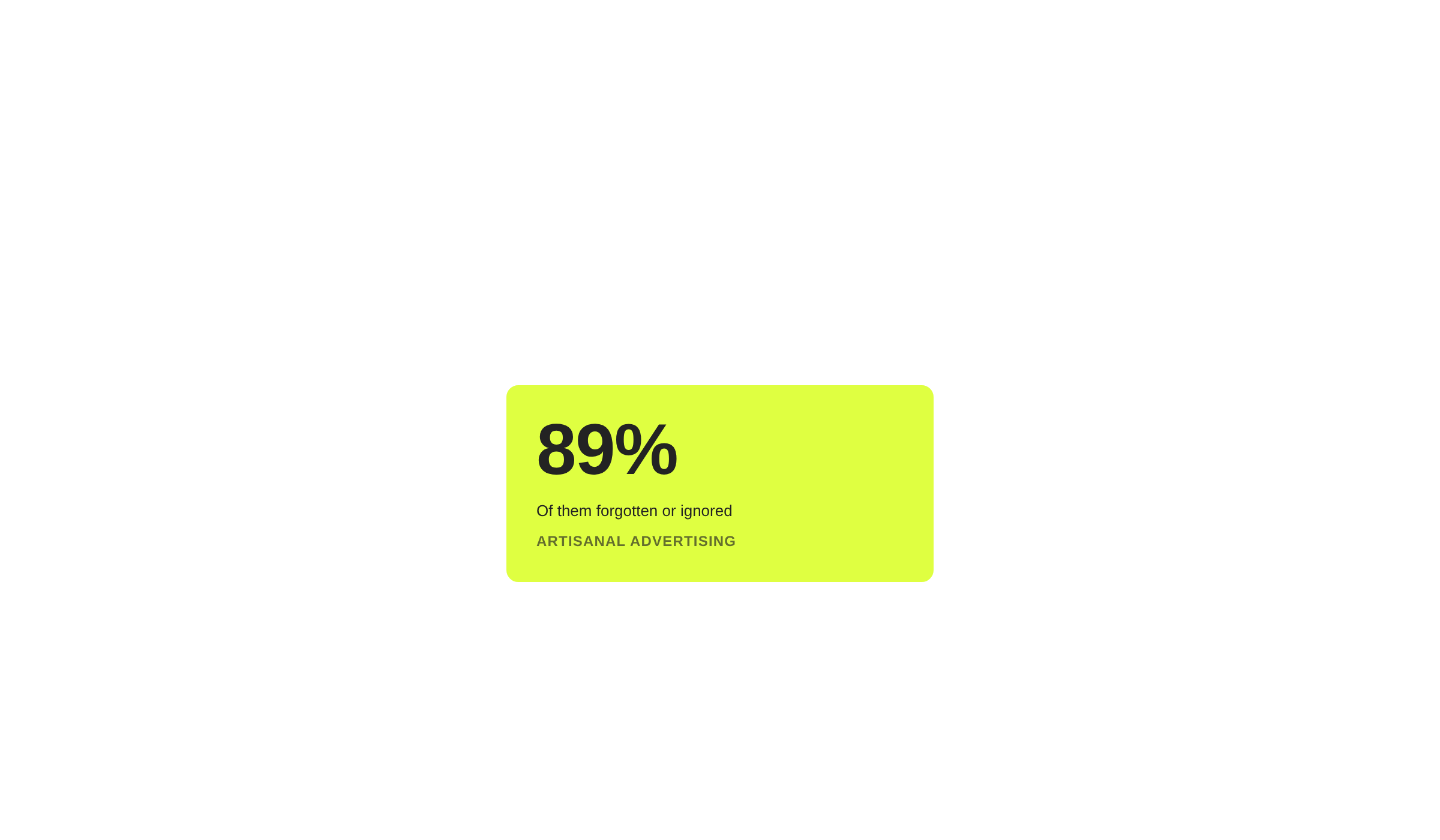
89% of ads are ignored and it costs $222bn a year
Most advertising is never registered by the person it reaches. Of the roughly 4,000 ads someone sees in a day, 89% are forgotten or ignored, which came to $222 billion of wasted ad spend in 2020. So what separates the advertising that lands from everything else?
What being ignored costs advertisers every year
The three numbers are worth holding together, because each one is unremarkable on its own and alarming in sequence. They also decide whether the rest of the plan in how to compete when competitors outspend you does anything at all.
- Roughly 4,000 advertisements seen per person per day. Source: How Many Ads Do You See In One Day.
- 89% of them forgotten or ignored. Source: Artisanal Advertising.
- $222 billion of wasted ad spend in 2020. Source: Advertising spending in North America from 2000 to 2023.
That waste is not a media-buying problem. The impressions were delivered and paid for. They simply did not register, which means the money was spent on the opportunity to be noticed and the opportunity was not taken.
Nearly nine out of ten advertisements are paid for, delivered, and then forgotten. The media worked. The advertising did not.
Why standing out is the cheapest efficiency gain available
For a small advertiser this is the most valuable finding in marketing, because acting on it costs nothing. You cannot outspend a larger competitor on media. You can look and sound completely unlike them, and that decision is free.
The easiest way to improve the efficacy of your marketing is having a brand identity and advertising that stands out. It multiplies the value of impressions you have already bought rather than requiring more of them.
How to tell whether your advertising stands out
Most companies believe their advertising is distinctive because they have only ever seen it on its own. The squint test fixes that in about ten minutes.
- Put all of your advertising on a wall, including your competitors' advertising.
- Stand a few feet back and squint.
- Ask whether your brand cuts through the visual clutter.
Blurring the detail is the point. It removes everything a viewer would not take in during a two-second scroll and leaves only what actually distinguishes one brand from another at a glance. Most categories fail this test badly, and the failure is usually invisible until the work is pinned up side by side.
Why saying less improves message recall
The second free fix is about quantity rather than appearance. The likelihood of a message being recalled falls as the number of messages in an advertisement rises. Source: Kantar Millward Brown.
The recommendation that follows is uncomfortable for anyone with a stakeholder list. Say no more than one or two things per advertisement. Group your messages into a handful of overarching themes that connect to a larger story, prioritize ruthlessly among them, and make fewer advertisements shown to more people rather than more advertisements shown to fewer.
Most people can catch a ball. Throw them three or four and they drop everything.
Why different brands grow their value faster
Distinctiveness is not only an attention tactic, it shows up in brand value. Kantar's BrandZ data scored brands on how different and how disruptive they were perceived to be, and tracked brand value over the following three years.
Brands scoring high on both grew brand value 28% over three years. Brands scoring low on both lost 5%. Source: Kantar Millward Brown, BrandZ, 2017.
A thirty-three point spread between those two groups is the return on a decision that costs nothing but nerve. The practical instruction attached to it is to look at what everyone else in your category is doing and then do the opposite, to find creative or unusual ways to show your products and achievements, and to avoid cliches, tropes, generic messaging and lists of statistics.
What makes a campaign famous
The strongest version of standing out is fame, and the research treats it as a product rather than a mood.
Fame equals uniqueness multiplied by creativity multiplied by reach. Miss any one of the three and the result collapses, which is why a highly creative campaign nobody sees performs no better than a widely seen campaign nobody remembers.
Creatively awarded campaigns were the most efficient of all between 1996 and 2014, and fame-driving campaigns outperform all others on business metrics. Source: Les Binet and Peter Field, The Long and the Short of It, IPA, figures 44 and 60.
Being ignored is not a creative disappointment in advertising. It is 89% of a media budget.
Where to start
Run the squint test this week. It costs an afternoon and it tells you whether the rest of your marketing spend is landing on an audience that can pick you out.
Then cut the number of things each piece of work is asked to say. How many people that work needs to reach is covered in how much reach a campaign needs. Why chasing attention alone backfires is covered in Machiavelli and the dangers of UGC ads, and how to find the difference worth dramatizing in the first place is covered in why finding your hidden advantage can get people to buy more.
This article draws on How to build a big brand on a small marketing budget, our report on cost-effective brand building.




Being outspent is a media problem before it is a brand problem. Your competitors are not smarter than you, they simply reach more of the market more often, and that advantage compounds quietly for years. Six decisions decide how far a smaller budget goes. So where does the money actually have to land?