00:00
/
00:00
Being outspent is a media problem before it is a brand problem. Your competitors are not smarter than you, they simply reach more of the market more often, and that advantage compounds quietly for years. Six decisions decide how far a smaller budget goes. So where does the money actually have to land?
Most of your market is not buying today
The people evaluating vendors this quarter are a small slice of your category. Everyone else has no live need, no shortlist, and no reason to notice you, which means a plan built only around active buyers is built around a fraction of the people who will eventually buy.
Big brands grow because they spend against both groups at once. They convert the demand that exists today and they build the pipeline of demand that arrives later. Smaller brands, forced into cheaper channels, usually reach only the first group, and the difference is not a matter of taste or talent. It is a matter of how much of the category each budget can physically address.
There are two pools here, not one. Existing demand is the set of people who will likely buy now, and it is the pool every marketing team already fishes in. Total demand is everyone who might buy at some future point, and it is far larger. A budget that only ever touches the first pool converts what is there and leaves the second to whoever did bother to advertise into it.
That is the asymmetry underneath everything else here. A competitor who reaches the whole market is not only selling more today, they are deciding who gets considered in two years.
A bigger marketing budget does not buy better decisions. It buys more of the market, more often, and for most categories that is the whole of the advantage.
The proportion of B2B buyers who are out of market at any one time is covered in full in our article on the 95-5 rule. What it means for how wide your campaign should go is covered in how much reach a campaign needs.
Short-term advertising cost the industry two decades of effectiveness
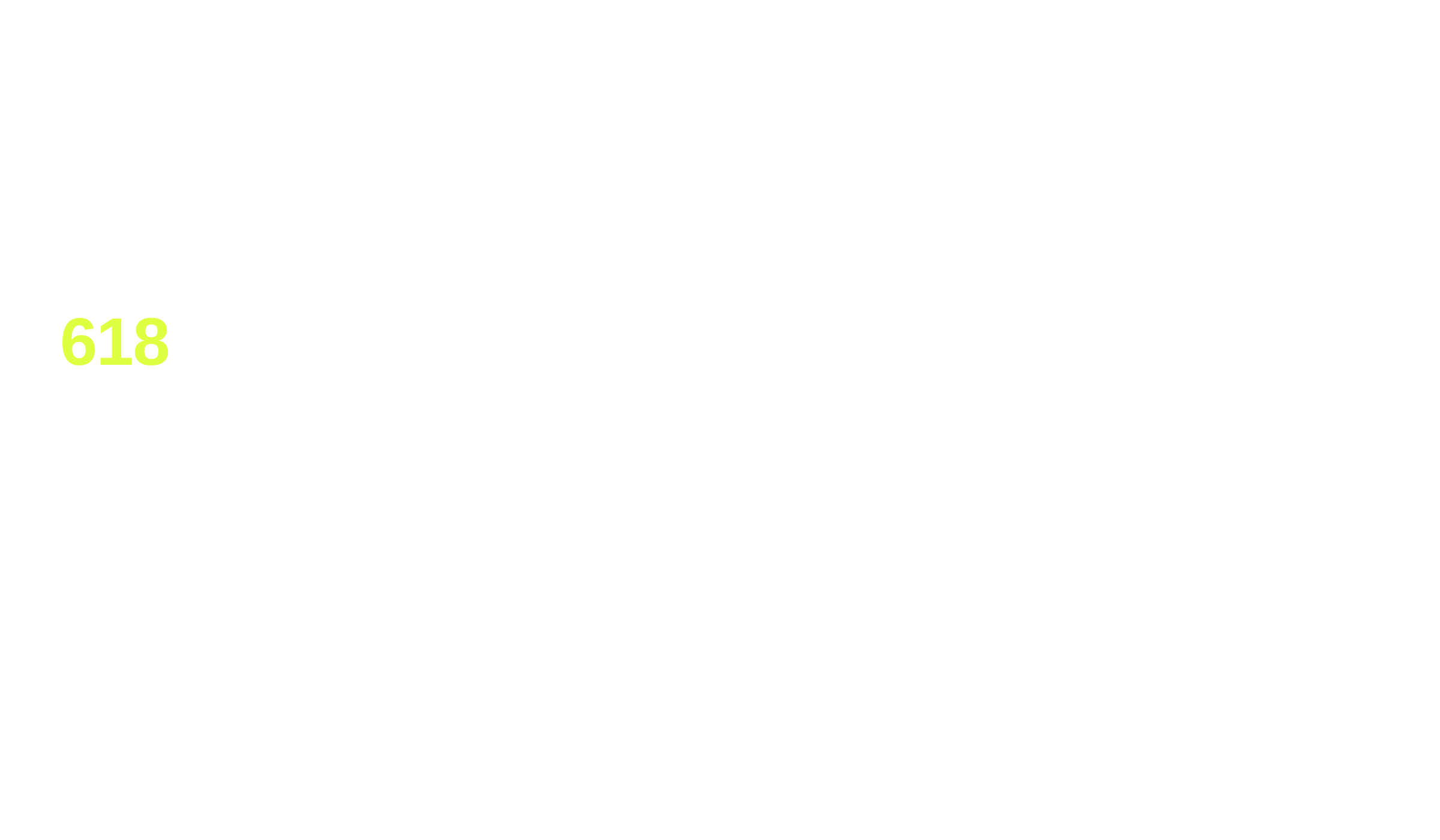
The move to measurable, short-term advertising looked like an efficiency gain. Across the IPA Databank it shows up as the opposite. Campaign effectiveness measured across 618 campaigns fell as short-term promotions rose, and the effects that declined were the commercial ones, profit, sales, market share, loyalty and price sensitivity.
Nothing about that decline was obvious while it was happening, which is what makes it worth knowing about. Each individual decision to shift budget toward the measurable half looked like good management. The aggregate of twenty years of those decisions is a discipline that got worse at the things it exists to do.
That is the cost of buying only what can be attributed this quarter. The full evidence, and what happened to the brands that committed hardest to it, is in short-term advertising broke campaign effectiveness. The mechanism behind rising acquisition costs is covered separately in why performance marketing will not grow your brand.
The channels that build brands are the ones that make the profit
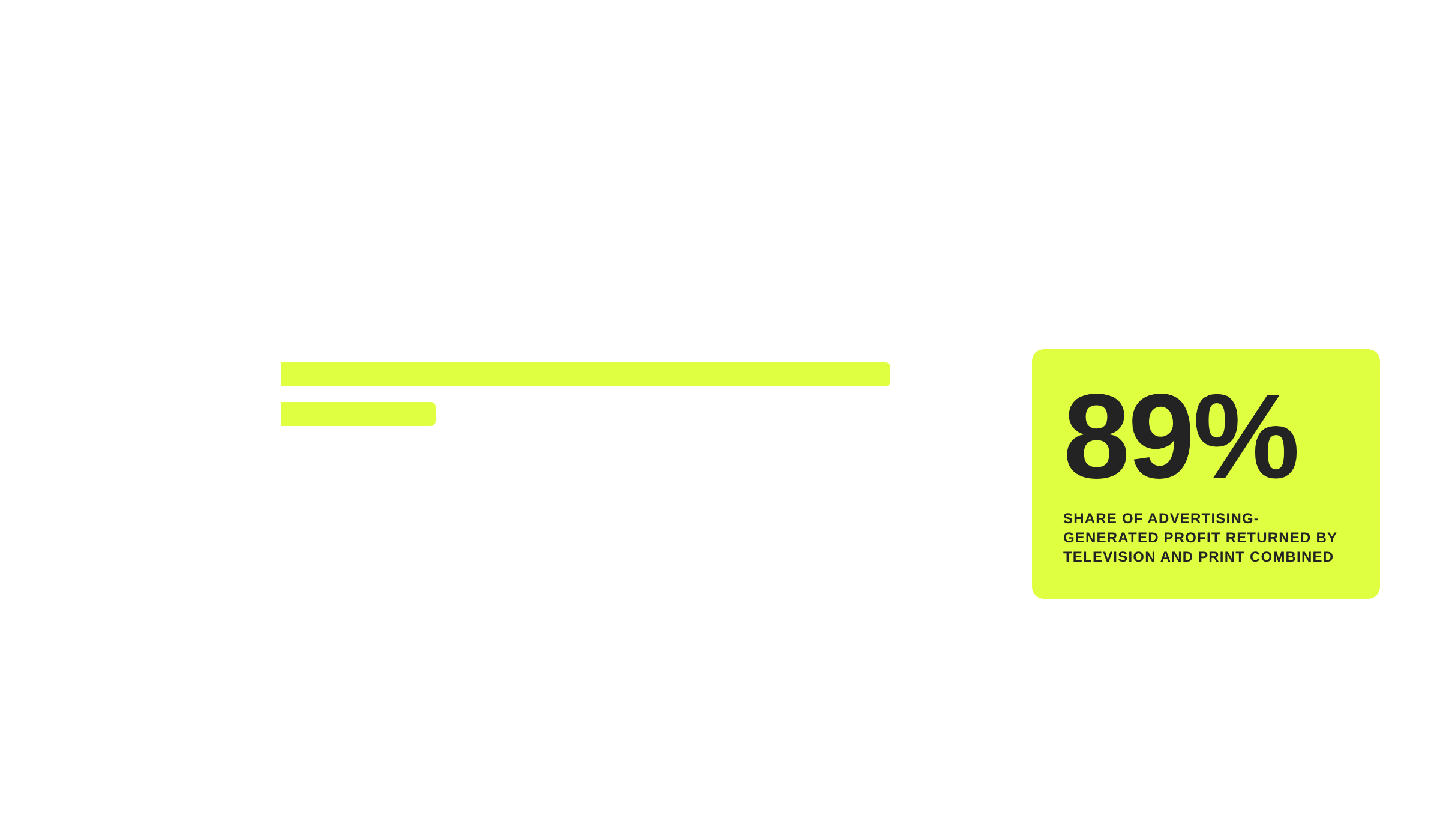
Channel choice sets your profit ceiling before anyone writes a line of copy. Television and print together deliver 89% of all advertising-generated profit, according to Profit Ability: the business case for advertising, November 2017, drawing on the Ebiquity ROI campaign database and Gain Theory across 1,954 campaigns.
Most companies reading this cannot buy television. The useful part is not the instruction to buy it, it is what the ranking says about why those channels earn: they reach broadly, they carry emotional work well, and they are bought by audience rather than by click. Those three properties are available in cheaper media. The ranking is a description of what to look for, not a list of what to purchase.
The full channel breakdown, the objective-by-objective rankings, and the finding that every additional channel raises campaign return are in TV and print deliver 89% of advertising profit.
Forty-six for brand, fifty-four for activation
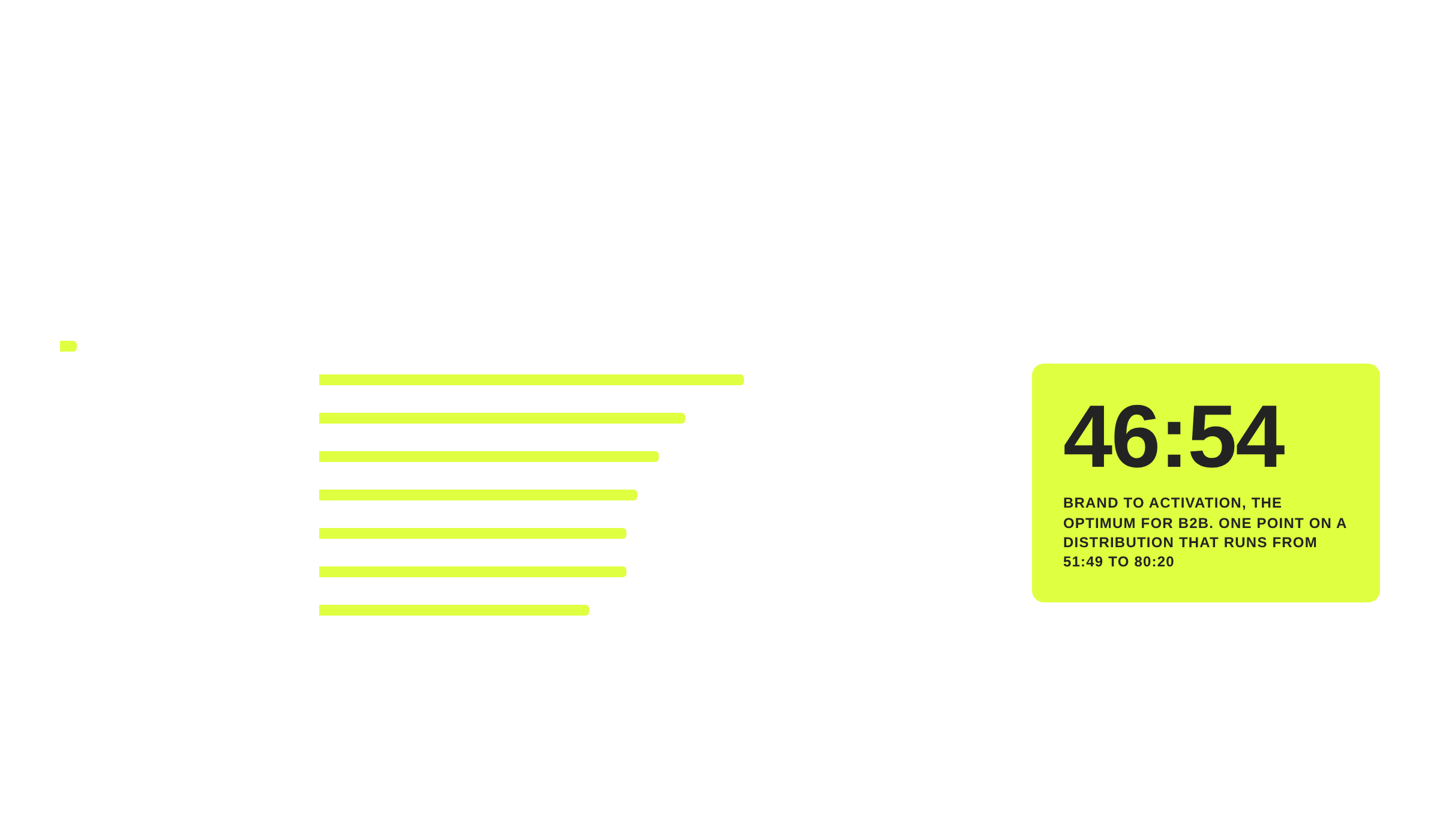
The split between brand building and sales activation is a research finding, not a matter of taste, and B2B has its own number. Binet and Field's B2B work for the LinkedIn B2B Institute puts the optimum at roughly 46% brand and 54% activation.
Two things follow. Spending everything on activation raises revenue this quarter and removes the growth that would have come later. And the optimum is not universal, it moves by category, which is exactly why B2B has a different figure from the cross-category average.
The number is also a useful argument to have internally, because it converts a debate about whether brand work is worth funding into a question about proportion. Almost half is a very different starting position from whatever is left over.
Both points, and the gap between what companies should spend and what they actually do spend, are in how to split a B2B marketing budget.
A year of brand video costs less than it looks
Broad reach sounds unaffordable because production is usually priced one shoot at a time. Plan the whole year in one run and the arithmetic changes. One crew and one setup produce a small number of expensive hero films, a steady flow of short pieces, and a stream of cheap visual reminders, and between them they cover the same jobs a television schedule would.
The cadence is roughly one to two hero spots a year against five small cues a week. The cheap end of that is where most of the frequency comes from, and frequency is what turns something watched once into something recognized.
What comes out of it is closer to an infrastructure than a campaign. It builds familiarity and trust over time, the way television advertising does, and it runs through ordinary digital channels rather than bought airtime.
How to plan and pay for a year of output is in shoot a year of brand video in one production run, and the campaign framework it sits inside is explained in a simple one-ad campaign framework.
None of it works if nobody notices
Every decision above assumes the advertising registers. Most of it does not. People see roughly 4,000 ads a day and forget or ignore 89% of them, which came to $222 billion of wasted ad spend in 2020.
Standing out is the cheapest efficiency gain available to a small budget, because it costs nothing to look different and it multiplies the value of every impression you have already paid for. It is also the one decision on this page that a competitor with ten times your budget cannot take away from you, since money buys more impressions but not a more distinctive brand.
What being ignored costs, and the two fixes that need no extra media, are in 89% of ads are ignored.
What to measure
Set the objective before the campaign, not after it. Four measures carry most of the weight for brand work: the percentage of the audience reached, ad recall, change in sentiment, and share of search. Two or three of those, tied to a business objective and given a benchmark and a target, will tell you more than a dashboard tracking everything available.
This article summarizes How to build a big brand on a small marketing budget, our report on cost-effective brand building.